Nazi dictator Adolf Hitler and his murderous regime were known for grandiose and reckless schemes, but few were as ambitious as a railway with gargantuan trains designed to link Germany with far-flung destinations.
Streamlined luxury trains with a swimming pool and 196-seat cinema on board were to race to India, along with spartan carriages attached for slave labour. Meanwhile freight trains as long as cruise ships were to plunder conquered territory like the Ukraine.
Hitler's plans for the scheme at the height of World War II sent engineers at the Henschel rail plant reeling when they were asked to present their calculations for a "standard locomotive" in 1943.
They came up with dozens of broad-gauge locomotives powered by electricity, steam turbines or diesel-electric traction motors. They were to be 42 metres long, 6 metres wide and 7 metres tall.
The monstrous double-deck trains were designed to achieve speeds of up to 250 km/h, or as fast as a modern express. They needed multiple engines producing up to 36,600 horsepower.
The national Reichsbahn railway company was involved in the planning alongside established engineering companies like Krauss-Maffei, Borsig and Krupp.
Hitler's super-train was intended to eclipse everything that had gone before and the dictator brushed aside the concerns of the experts. They pointed out the incompatibility with the existing network, the immense costs and the absurd timeframe.
The project was a personal favourite of the Führer which meant top priority and absolute secrecy. Above all, Hitler ignored any technical or economic reservations.
For his definitive book on the topic, author Anton Joachimstaler spoke in 1980 on the topic with Hitler's former architect Albert Speer, who served a 20-year jail term for his Nazi involvement. He was released in 1966.
Speer said the project was so top secret that the dictator had not discussed all the details with him.
When shown documents, Speer expressed doubts that the trains would ever reach the planned speed of 250 km/h and said laconically, "But he was like that, once he got something into his head it had to be carried out until the bitter end."
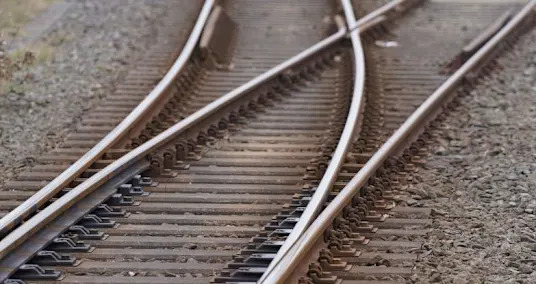
Although 1.43 metres was the recognised standard distance between the rails or gauge for railways, Hitler suggested a width of 4 metres before the experts managed to "negotiate down" to 3 metres. According to these plans, passenger trains were to reach a length of 600 metres, and freight trains as long as 1.2 km.
Even in April 1943, shortly after Germany's disastrous defeat by Russia's Red Army at Stalingrad, Hitler defended the railway plans as "essential for the war effort."
Like his plans for a bombastic, neo-classical world capital named "Germania" drawn up by Speer, the new railway was to be built after a projected WWII victory led to German world domination.
The railway was designed to link Berlin with Moscow, Bucharest and Istanbul and on to India and Vladivostok in Russia. Blueprints were drawn up and detailed scale models of trains and stations built.
The double-decker first class and even second class carriages were to be sumptuously furnished with wooden panelling, fine carpets and leather armchairs.
Despite Nazi subjugation of countries along the rail routes, the express trains would carry 20-millimetre anti-aircraft guns for protection.
The broad gauge meant passengers had four times the space of ordinary railway carriages and the tall dining room of restaurant car was of ocean liner proportions. Up to 4,000 passengers could be carried in one train.
The interior of the trains also revealed the cruel double standards of the Nazi regime. For "German compatriots" and travellers from allied countries, the trains were literally moving palaces on rails.
Other railway carriages at the rear set aside for the transport of forced labourers were cramped, with only wooden bench seats to sit and sleep on. These workers were to be transported into the heart of the Reich to toil for the war effort.
Palatial stations were to be built along the route, including a bombastic domed terminus in Munich. Forced labourers would build the foundations, with completion planned to follow a German victory.
By mid-1943 however, Nazi Germany was starting to lose the war badly. But engineers were still fine-tuning the details, surveying the route and carrying out material tests but the dream of the broad gauge railway was being shattered by reality.
The project kept some 100 civil servants and 80 engineers occupied right up until the final days of the war. For them, the work had one advantage, they did not have to go to the front and fight the enemy.
And so they carried on planning, even though they were well aware that this railway would never run, as it was also technically impossible to build.
It would have meant reconstructing every single part of the existing rail network since the rails and bridges at the time would simply collapse under the weight of the massive trains.
Added to that, the resources needed to build thousands of kilometres of track on special concrete sleepers, hundreds of bridges and tunnels, and thousands of locomotives and carriages were simply not available during wartime.
Construction never began in earnest. All that remains of Hitler's super-train today are detailed models, artist impressions and books full of plans and maps.


LATEST POSTS
- 1
 The Way to Business: Startup Illustrations Learned
 - 2'Tangled' live-action movie casts Teagan Croft and Milo Manheim as Rapunzel and Flynn
- 3Flu season is ramping up, and some experts are "pretty worried"
- 4Finding the Universe of Craftsmanship: Individual Encounters in Imagination
- 5Trump administration plan to reduce access to some student loans angers nurses, health care groups


- The most effective method to Help a Friend or family member Determined to have Cellular breakdown in the lungs
- West Bank man indicted for extortion, impersonation of IAF pilot, Mossad agent, illegal entry
- Smooth countdown continues for Artemis II moon mission
- 5 Home EV Chargers for Proficient and Solid Charging
- Pat Finn, actor from 'The Middle,' dies at 60 after bladder cancer diagnosis
- Step by step instructions to Think about Disc Rates Across Various Banks
- 13 must-see moon events in 2026: Eclipses, supermoons, conjunctions and more
- Instructions to Guarantee Kids Foster Solid Dental Propensities
- Instructions to Floss Appropriately and Forestall Gum Sickness