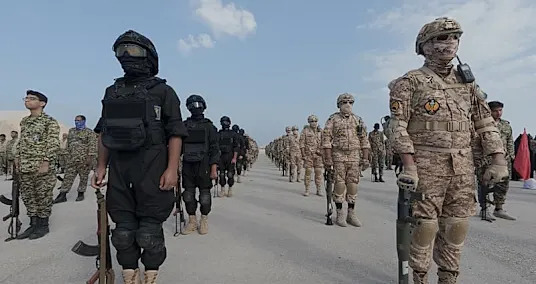
Since the Iran war began, cryptocurrency flows into the country have surged.
Experts say digital currencies are being used to circumvent sanctions on Iran's Revolutionary Guards and to provide a financial lifeline for civilians battered by soaring inflation.
Cut off from the traditional financial system by decades of international sanctions, Iran has long used crypto as an alternative channel — to sell embargoed oil and discreetly fund allied armed groups such as the Houthi rebels in Yemen, according to US authorities.
And the use of cryptocurrencies has intensified in the current crisis.
In an unusually large movement of more than $10 million (€8.7mn) worth of cryptocurrencies left Iranian exchange platforms between 28 February — the first day of Israeli-US airstrikes — and 2 March, according to data analytics firm Chainalysis.
By 5 March, nearly one-third of these funds had been transferred to foreign exchanges.
While some of this exodus can be explained by citizens rushing to protect their savings, the sheer size of the sums involved suggests the involvement of "regime actors," said Kaitlin Martin of Chainalysis.
Such action would likely occur out of fear of further sanctions or cyberattacks, according to experts.
In June 2025, at the height of the previous Israel-Iran conflict, leading cryptocurrency platform Nobitex had $90mn (€78.1mn) stolen by hackers linked to Israel, according to blockchain company TRM Labs.
Massive crypto inflows to Iran's Revolutionary Guards
According to Chainalysis, several digital wallets used during this surge in cryptocurrency activity are directly linked to the Revolutionary Guards.
"Even during these internet outages, some outflows are seen, suggesting that some have access to the exchange's cryptoasset holdings even when its website is inaccessible," noted cryptocurrency analysts Elliptic.
The state's grip is massive.
Last year, wallets associated with the Guards were funded with more than $3 billion (€2.6bn) in cryptocurrencies, representing more than half of the country's cryptocurrency flows — a share that continues to grow according to Chainalysis.
Related
The Financial Times earlier this year reported that Iran offered ballistic missiles, drones and other advanced weapons systems for sale using cryptocurrencies.
These digital assets contribute to a veritable "shadow banking," said Craig Timm of the anti-money laundering organisation ACAMS.
Quicker to send and less expensive than a bank transfer, cryptocurrencies are difficult to trace, owing also to loopholes in global regulations, he added.
What crypto is favoured in Iran?
The Revolutionary Guards and the Iranian central bank favour "stablecoins" or digital currencies generally pegged to the dollar, in an attempt to avoid volatility.
But civilians are turning en masse to bitcoin, the world's leading cryptocurrency, which can be withdrawn from platforms and stored in personal wallets, beyond the authorities' reach.
Bitcoin currently trades for more than $68,000.
This strategy was already widely evident during brutally suppressed protests in Iran ahead of the war, according to Chainalysis.
In a country where inflation was already nearing 50% before the conflict started, cryptocurrencies are acting as a "lifeline" for the population in the face of the collapse of the national currency, said analyst Martin.
LATEST POSTS
- 1
 The Latest: Fueling begins as NASA aims to send 1st crew to the moon in 53 years
 - 2Instructions to Decide the Best SUV Size for Seniors
- 321 Incredibly Interesting Contemplations To Observe Consistently
- 4Getting Your Youngsters' Future: Grasping Legacy Regulations
- 5Artemis II's moonbound toilet is working again to astronauts' relief after overnight fix


- 4 astronauts are now on their path to the moon. Here’s what happens next
- Brazil's ex-president Bolsonaro operated on for hernia
- Building an Individual Brand: Illustrations from Powerhouses
- Find the Wonders of the Silk Street: Following the Antiquated Shipping lanes
- 7 Odd Apparatuses to Make Your Party Stick Out!
- AI is providing emotional support for employees – but is it a valuable tool or privacy threat?
- Artemis 2 astronauts see Earth in the rear-view mirror | Space photo of the day for April 3, 2026
- A photographer's journey to capture a blood moon rising over the South China Sea. 'It was an incredible moment'
- Lilly, Novo lock horns in India's obesity drug race